
If you’ve already had a root canal done and you’re now dealing with pain in that same tooth, it’s natural to feel frustrated, even a little worried that something went badly wrong. Here’s the reassuring part: root canal retreatment is a well-established procedure, and needing one doesn’t mean you did anything wrong or that your tooth is beyond saving. It simply means the tooth needs another, more thorough round of treatment.
This blog walks you through what root canal retreatment actually involves, why it’s sometimes needed even after a seemingly successful first procedure, and what to expect if your dentist recommends it.
What Is Root Canal Retreatment?
Root canal retreatment is exactly what it sounds like: redoing a root canal procedure on a tooth that was previously treated but hasn’t healed properly or has developed a new problem. Unlike a first-time root canal, retreatment involves removing the old filling material from inside the tooth first, before the canals can be cleaned, reshaped, and treated again. It’s a more detailed procedure, but the end goal is the same as before: saving your natural tooth and getting rid of the infection or irritation causing your symptoms.
Signs You May Need Retreatment
Not every twinge in a previously treated tooth means you need retreatment, but certain symptoms are worth getting checked out promptly.
Recurring pain or swelling around a tooth that’s already had a root canal is one of the clearest signs. If the discomfort had gone away after your first treatment and has now returned, or if you notice swelling in the gum near that tooth, it’s a sign the infection may not have fully cleared or may have returned.
A new infection near the old root canal site can also show up as a small bump on the gum, sometimes called a sinus tract, which is your body’s way of draining infection.
A cracked or leaking crown or filling is another common trigger. If the restoration placed over your root canal-treated tooth develops a crack or gap, bacteria can find their way back into the tooth, undoing the earlier treatment.
Missed canals from the original treatment are a less obvious but fairly common cause. Teeth, especially molars, can have extra or unusually curved canals that are easy to miss without proper magnification, and any canal left untreated can continue harboring infection.
Delayed crown placement after the original root canal can also be a factor. If a permanent crown wasn’t placed soon enough after the initial procedure, the tooth is left vulnerable to recontamination in the meantime.
Why Root Canals Fail
Understanding why a root canal doesn’t hold up the first time can help you make better decisions moving forward.
Curved or narrow canals are notoriously difficult to treat without the right tools. Without magnification, it’s easy for even a skilled dentist to miss a portion of a canal, leaving behind bacteria that eventually cause reinfection.
New decay around or under the old filling is another common cause. Even a well-done root canal doesn’t protect the tooth from fresh cavities forming nearby, which can eventually reach the treated canal.
A cracked tooth, sometimes from grinding or biting down on something hard, can let bacteria back in even if the original treatment itself was done correctly.
Restoration failure, such as a loose crown or filling, is often the simplest explanation. If the seal on top of the tooth breaks down, the canal underneath is no longer protected.
Delayed crown placement, as mentioned earlier, gives bacteria a window of opportunity to re-enter the tooth before it’s properly sealed.
The Retreatment Process, Step By Step
Retreatment generally follows a structured process, though the specifics can vary slightly depending on your case.
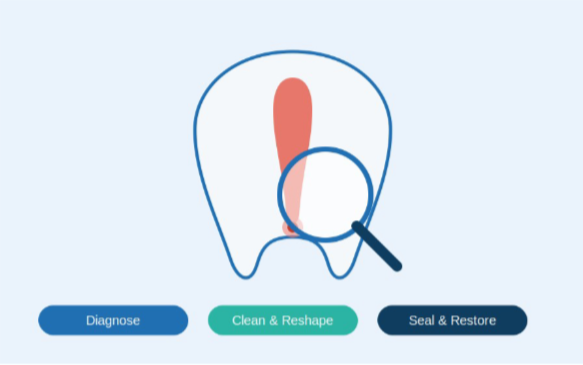
It starts with diagnosis, usually involving a clinical exam along with an X-ray, and in more complex cases, a CBCT scan, to get a clear picture of what’s happening inside and around the tooth.
Next, the dentist removes the old filling material from inside the tooth. This has to be done carefully to avoid damaging the surrounding tooth structure.
Once the canals are exposed again, they’re cleaned and reshaped, often under magnification using a dental operating microscope, which helps identify any canals or areas that may have been missed the first time around.
After cleaning, the canals are disinfected thoroughly to eliminate any remaining bacteria before being refilled with a suitable material.
Finally, a new crown or restoration is placed on top to seal and protect the tooth going forward, ideally without significant delay this time.
Retreatment Versus Extraction And Implant
When retreatment is recommended, some patients wonder if it’s simpler to just extract the tooth and get an implant instead. In most cases, saving your natural tooth through retreatment is the preferred route. Natural teeth generally function better than replacements when it comes to chewing efficiency and long-term jaw health, and retreatment avoids the additional time, cost, and healing process that comes with extraction and implant placement. Extraction is usually considered only when the tooth structure is too damaged to be salvaged or when retreatment isn’t likely to succeed.
Why Microscope-assisted Retreatment Matters
Since a large share of retreatment cases come down to missed canals or hard-to-reach areas from the original procedure, having a dentist use a dental operating microscope during retreatment can make a meaningful difference. It allows for a much clearer, magnified view inside the tooth, helping ensure that this second attempt actually addresses whatever was missed the first time.
Frequently Asked Questions
- Is root canal retreatment more painful than the first root canal?
Not typically. With proper anesthesia and modern techniques, retreatment is generally as manageable as the original procedure.
- How many visits does retreatment usually take?
This depends on the complexity of the case, but many retreatments can be completed in one to two visits.
- Will I need a new crown after retreatment?
Often yes, especially if the old crown had to be removed or damaged during the retreatment process.
- Can every root canal-treated tooth be retreated?
Most can, but the dentist will assess the remaining tooth structure and overall condition before recommending retreatment over extraction.
- How do I know if my pain is from the same tooth or a different one?
A dental exam along with an X-ray is the best way to confirm exactly which tooth is causing the discomfort.
- What happens if I ignore the symptoms and delay retreatment?
The infection can spread further, potentially affecting the surrounding bone and increasing the risk of losing the tooth altogether.
- Does insurance typically cover root canal retreatment?
Coverage varies by provider and plan, so it’s best to check directly with your insurance company.
- Can a retreated tooth fail again?
It’s possible, though addressing the root cause properly, including using magnification to catch missed canals, reduces this risk.
- Is a CBCT scan always required for retreatment?
Not always. It depends on how complex the case is and whether standard X-rays give enough information.
- How soon after noticing symptoms should I see a dentist?
As soon as possible. Waiting can allow the underlying infection to worsen and complicate treatment.
Conclusion
Needing a root canal retreatment isn’t a setback, it’s simply the next right step toward keeping your natural tooth healthy and pain-free. If you’re experiencing any of the symptoms mentioned above, it’s worth getting it checked rather than waiting it out. At Phoenix Multispeciality Dental Clinic in Bardoli, retreatment is done under microscope guidance for greater precision. You can call +91 8141217111 to book a consultation.