
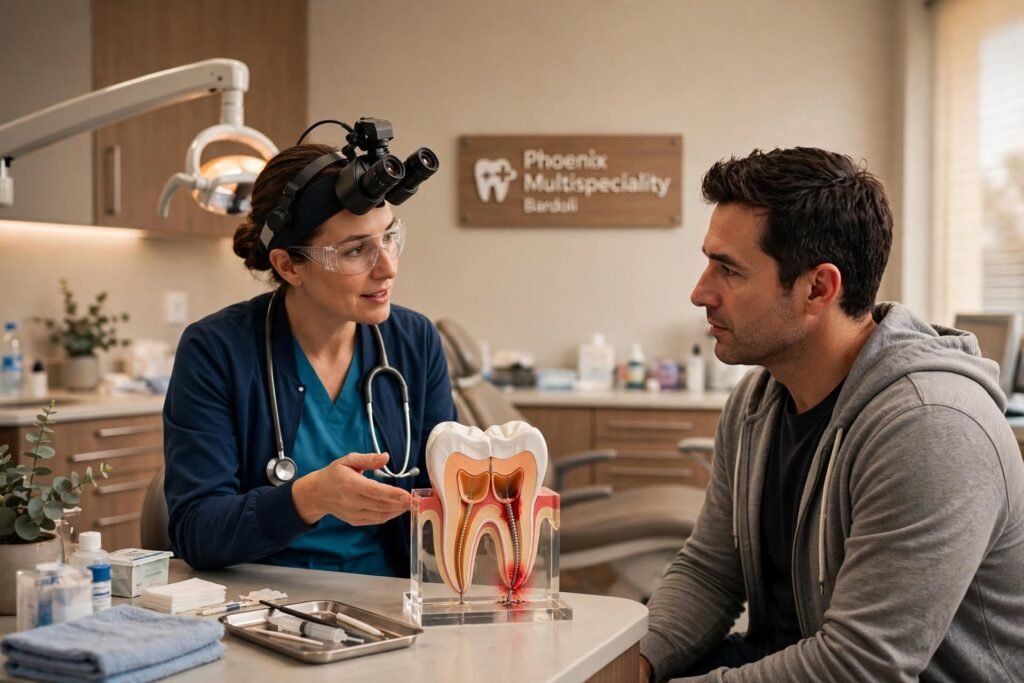
A tooth that hurts again after a root canal needs answers, not panic
You had a root canal to save your tooth and stop the pain. So if that same tooth starts aching again months or even years later, it is completely natural to feel worried, frustrated, or confused. You might wonder if the first treatment was done wrong, or if the tooth now has to come out.
Please do not assume either of those things. A tooth can trouble you again for several understandable reasons, and in many cases there is still a way to save it. That way is often re root canal treatment, also called root canal retreatment. This guide explains, in simple words, why a first root canal can fail, what retreatment actually involves, and what questions to ask before you decide anything. Only an in-person examination and an X-ray can tell what is happening inside your tooth, and what can realistically be done to help it.
What re root canal treatment actually is
Re root canal treatment means reopening a tooth that has already had a root canal, carefully removing the old filling material from inside the roots, cleaning and disinfecting the canals again, and then filling and sealing them once more. After that, the tooth is rebuilt with a new filling and, in most cases, a protective crown.
It sounds similar to a first root canal, and the basic idea is the same: remove the source of infection from inside the tooth and seal it well. In practice, retreatment is usually more detailed and more time-consuming. The dentist first has to work through the existing crown, filling, and sometimes a post inside the root, find out what was missed or what has changed, and then correct it. That is why retreatment is often handled by a specialist in saving teeth, called an endodontist, and why magnification under a dental microscope can make such a difference when you are working in such a small, detailed space inside the root.
Why a first root canal can fail
A root canal does not usually fail for one dramatic reason. More often, it is about the tiny, hidden anatomy inside a tooth, or about what happens to the tooth afterwards. Common reasons include:
- A canal was missed: Some teeth have an extra, very narrow canal that is hard to see. If it is not cleaned, bacteria can remain inside.
- The canals are curved or narrow: Roots can bend, narrow, or harden with age, making them difficult to clean fully the first time.
- The cleaning or sealing was incomplete: If a canal was not shaped, disinfected, or sealed along its full length, infection can return.
- Bacteria leaked back in: A loose, cracked, or delayed crown or filling can let saliva and bacteria enter again. This is often called leakage.
- The final crown was delayed: Leaving a treated tooth unprotected for too long increases the risk of leakage and fracture.
- New decay or a crack developed: Fresh decay, a hairline crack, or damage to the tooth or root can create a new pathway for bacteria, even after good treatment.
Understanding the cause matters, because redoing the same steps without fixing the reason helps no one. Retreatment only makes sense when the cause can be identified and corrected, and when the tooth itself is still strong enough to be restored and used comfortably for chewing afterwards.
Signs you should get checked promptly
Do not wait for severe pain before you seek advice. Book a dental examination if you notice any of the following in a tooth that has had a root canal:
- Pain when biting, chewing, or pressing on the tooth that does not settle
- Lingering sensitivity to hot or cold, or a dull ache that keeps returning
- Swelling of the gum or face, or tenderness around the tooth
- A small pimple-like bump on the gum near the tooth, which may come and go
- Darkening of the tooth, a loose crown, or a filling that feels broken
An X-ray finding can matter even when you feel nothing at all. A quiet infection around the root tip can sometimes be seen on an X-ray before it causes symptoms, so no pain does not always mean no problem. Equally, pain alone does not prove that retreatment is needed. Examination and X-ray together help your dentist confirm the real cause.
Step by step: what happens during retreatment under a microscope
Knowing the steps often makes the treatment feel less daunting. While every case is different, retreatment at a microscope-based clinic generally follows this path.
First, your dentist examines the tooth, reviews any previous X-rays and treatment history you can bring, and takes a fresh X-ray. This shows the roots, the previous filling, and any infection around the root tip. You will discuss restorability, the likely cause, and your options before treatment begins.
Next, the tooth is numbed and comfort measures are used, although your individual experience can vary. The dentist then removes the crown, post, or filling as carefully as possible to reach inside the tooth. Where a crown can be preserved, that will be discussed, but it cannot be promised in every case because access to the canals comes first.
Then comes the microscope-guided work. At Phoenix Multispeciality Dental Clinic in Bardoli, treatment is provided under a dental operating microscope. The magnification and light help the dentist look for hidden canals, check for cracks, remove old filling material, and clean areas hard to see with the naked eye alone. The canals are disinfected, shaped, and sealed again.
Finally, the tooth is rebuilt with a secure filling, followed by a new crown where needed to protect it and restore chewing. If retreatment alone cannot reach the problem, your dentist may also discuss another option, such as apicoectomy, a minor surgical procedure at the root tip. That decision depends entirely on your X-ray and tooth condition.
Aftercare: what to expect and how to protect the result
After retreatment, some soreness or tenderness when biting is common for a short period, especially if there was infection or swelling beforehand. Follow the medicines and instructions your dentist gives you for your case, rather than relying on advice meant for someone else. Eat softer foods on the other side until your dentist advises otherwise, and avoid chewing hard foods on the treated tooth until the final restoration is complete.
Keep brushing gently but thoroughly around the area, and attend follow-up visits and X-rays so healing can be checked. Most importantly, do not delay the final crown or permanent filling. A carefully retreated tooth can still fail again if it is left unsealed or unprotected, because bacteria can leak back in and a weakened tooth can crack. If you develop increasing swelling, spreading pain, fever, difficulty opening your mouth, or trouble swallowing, contact a dentist promptly or seek urgent care rather than waiting for a routine appointment.
Retreatment is about saving a restorable tooth, not redoing for the sake of it
If a previously treated tooth is troubling you, the most helpful question is not just, “Can it be redone?” It is, “What went wrong, can that be corrected, and is this tooth worth saving?” Bring your old X-rays and treatment notes if you have them, and ask for the cause, the plan, and the restoration to be explained clearly. For a consultation in Bardoli, you can contact Phoenix Multispeciality Dental Clinic to have the tooth examined in person. No blog can diagnose your tooth, but the right examination can give you a clear, calm next step.
Frequently asked questions
- What is re root canal treatment?
Re root canal treatment, or root canal retreatment, is a procedure for a tooth that has already had a root canal but has become infected or painful again. The dentist reopens the tooth, removes the old filling material, cleans and disinfects the canals again, and then fills, seals, and restores the tooth, usually with a new crown.
- Why would a root canal need to be done again?
Common reasons include a canal that was missed the first time, curved or narrow canals that were difficult to clean fully, incomplete sealing, bacteria leaking back in through a loose or delayed crown or filling, new decay, or a crack in the tooth or root. An examination and X-ray are needed to find the cause in your tooth.
- How is retreatment different from a first root canal?
The goal is the same — to clean inside the tooth and seal it — but retreatment first involves removing the existing crown, filling, post, and old root filling material, and finding out what went wrong. For that reason it is often more detailed and can take longer than a first root canal.
- Is re root canal treatment painful?
Comfort measures, including numbing the tooth, are used during treatment, but individual experience varies and no treatment can be promised to be completely painless for every person. Some soreness or tenderness afterwards is common, especially if there was infection beforehand. Tell your dentist if pain increases rather than settles.
- How long does root canal retreatment take?
It depends on the tooth, the number and shape of its canals, whether a crown or post has to be removed, and how much infection is present. Some cases are completed in one visit and others need more than one. Your dentist can give you a realistic plan after examining the tooth and X-ray.
- Can my existing crown be saved during retreatment?
Sometimes a crown can be worked through or preserved, and sometimes it needs to be removed to get safe, clear access to the canals. This cannot be promised before the tooth is examined. Your dentist will explain the options and the condition of your crown before treatment starts.
- What role does a dental microscope play in retreatment?
A dental operating microscope provides magnification and focused light inside the tooth. That helps the dentist look for hidden or extra canals, remove old filling material more precisely, and check for small cracks. Phoenix states it is the first and only clinic in Bardoli to provide dental treatment under a microscope.
- What if retreatment cannot save my tooth?
If the tooth is cracked beyond repair, cannot be restored, or retreatment cannot correct the cause of failure, your dentist may discuss other options such as apicoectomy in selected cases, or extraction and replacement. The right option depends on your tooth, bone, and overall oral health, and should be decided after examination.
- Do I always need a new crown after retreatment?
In many cases a secure permanent filling and a protective crown are an important part of protecting a retreated tooth, especially for back teeth that bear chewing forces. Whether you need a new crown, and when, depends on how much tooth structure remains. Do not delay the final restoration your dentist recommends.
- When should I seek care urgently after a root canal?
Seek prompt dental care if you develop increasing swelling, spreading pain, fever, difficulty opening your mouth, or difficulty swallowing. Do not wait for a routine appointment in that situation. For ongoing ache, biting pain, or a gum bump near a treated tooth, book an examination promptly even if the pain is mild.